Six visual geometries
The generator explores multiple geometric arrangements using a shared approach to payload encoding.
What if data had a different shape?
An experimental visual-code format exploring how text can become geometric patterns and be read back by a dedicated decoder. A working space for encoding, rendering and scanning ideas.
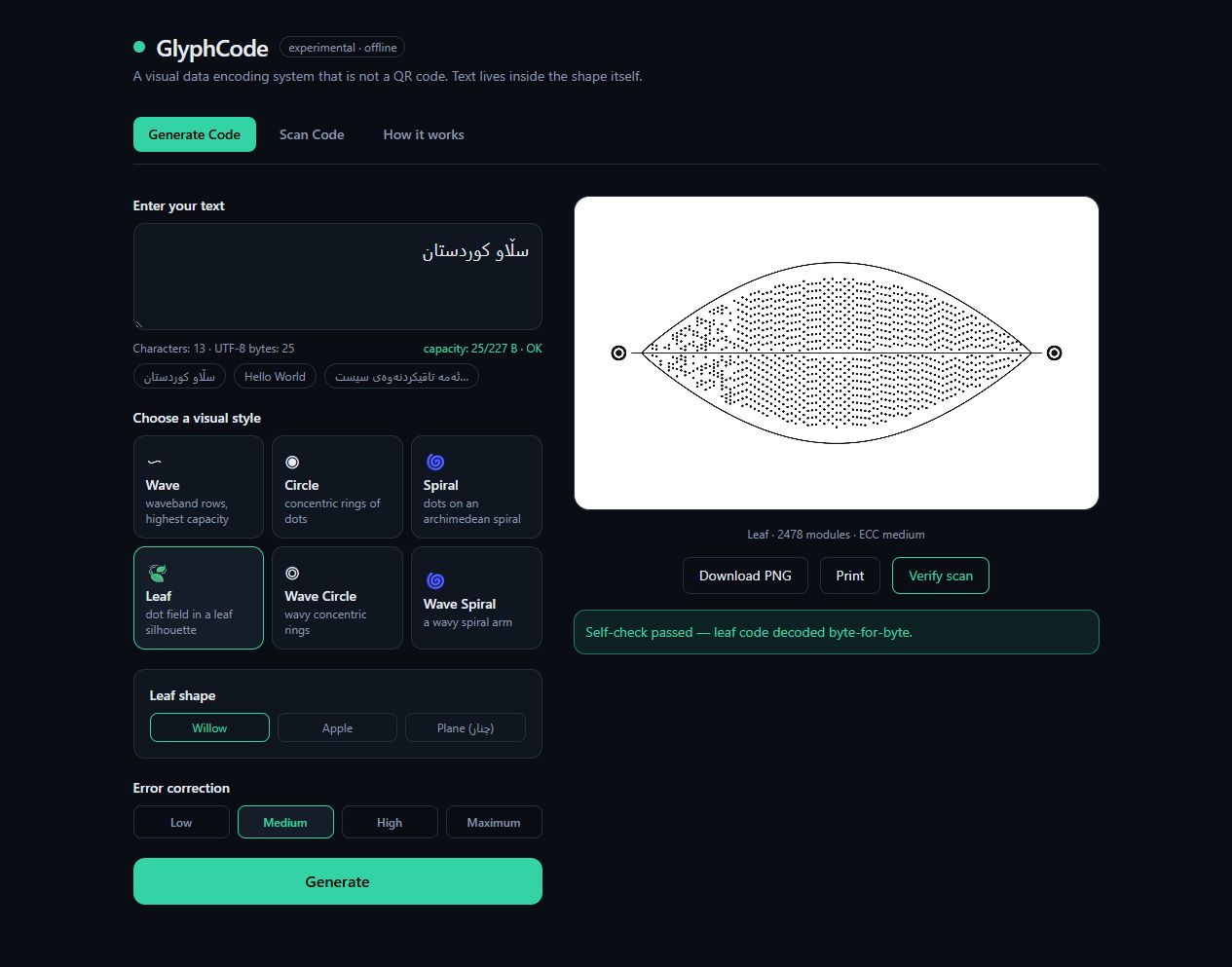
Visual codes balance data capacity, recognizable structure and reliable decoding. This project asks how that balance changes when the underlying geometry changes.
Build the format from the payload outward: encode text, add integrity and error-correction information, render the result and explore decoding it with a purpose-built scanner.
The generator explores multiple geometric arrangements using a shared approach to payload encoding.
UTF-8 payloads become a structured visual representation that can be rendered and inspected.
The project includes its own scanning and decoding workflow for its custom format.
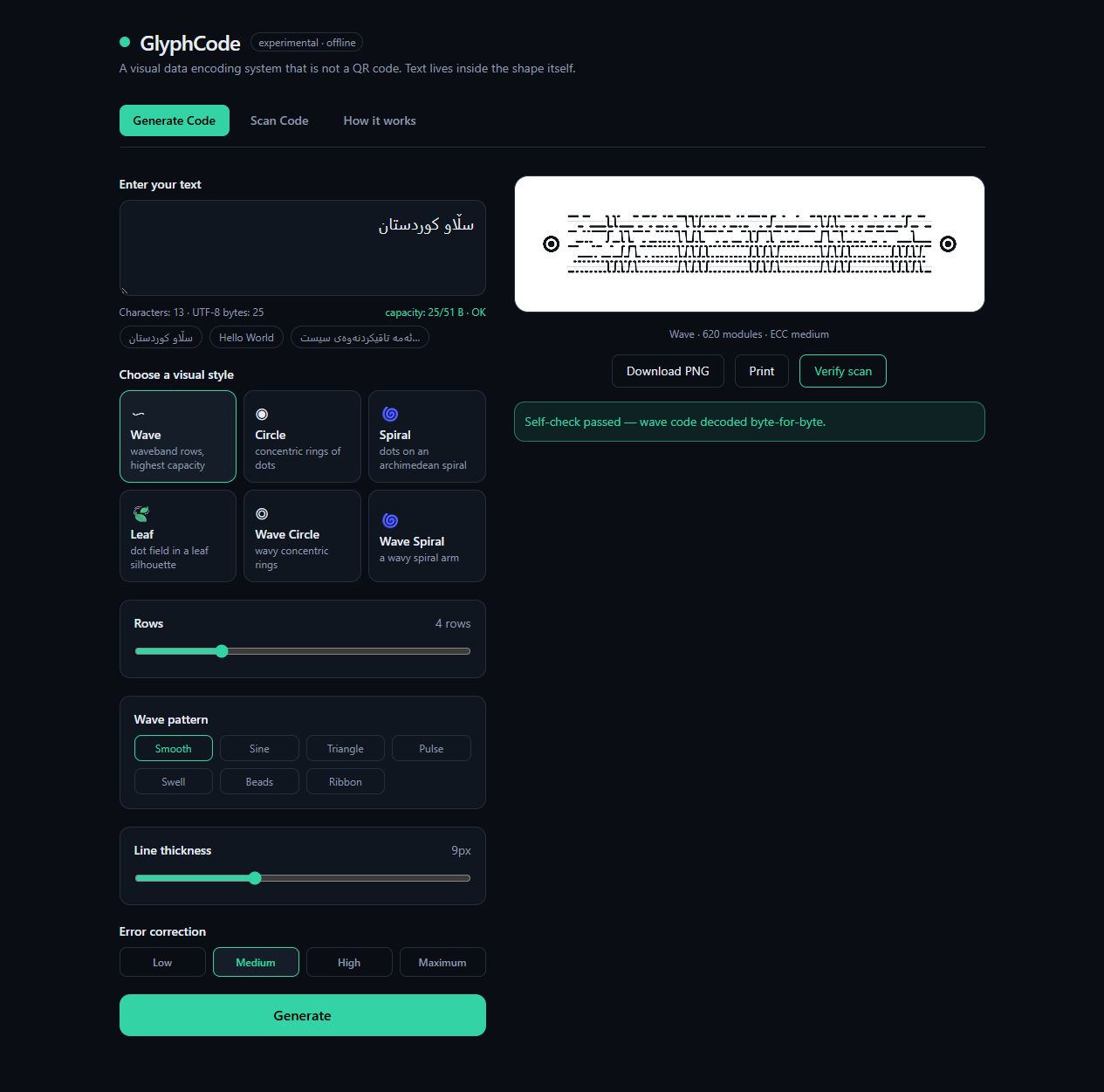
Design choices become useful when the system underneath supports them.
Text is encoded as UTF-8 bytes and packaged into the custom format before being mapped to a geometric layout.
CRC32 checks payload integrity, while Reed–Solomon adds error-correction structure. Their behavior is part of the encoding and decoding experiment.
The renderer and scanner must agree on the geometry and symbol mapping. Exploring that boundary is the central engineering challenge of the prototype.